Criteria for choosing marine equipment for industrial vessels
Choosing marine equipment for industrial vessels is a critical decision within naval engineering. This process is not limited to selecting functional components. It involves ensuring the safe, efficient and regulation-compliant integration of systems designed to operate in demanding environments for decades.
In industrial vessels such as fishing boats, offshore vessels, dredgers or auxiliary ships, marine equipment including servomotors, mooring systems, davits, cranes or propulsion systems is exposed to severe operating conditions: dynamic loads, corrosion, intensive duty cycles and strict regulatory requirements.
In this article, we analyse the engineering and regulatory criteria that should guide the selection of marine equipment for industrial vessels, from a technical perspective focused on decision-making.
What is considered marine equipment in industrial vessels
Marine equipment includes all mechanical and structural systems that enable the functional operation of a vessel beyond the main hull structure.
Main categories
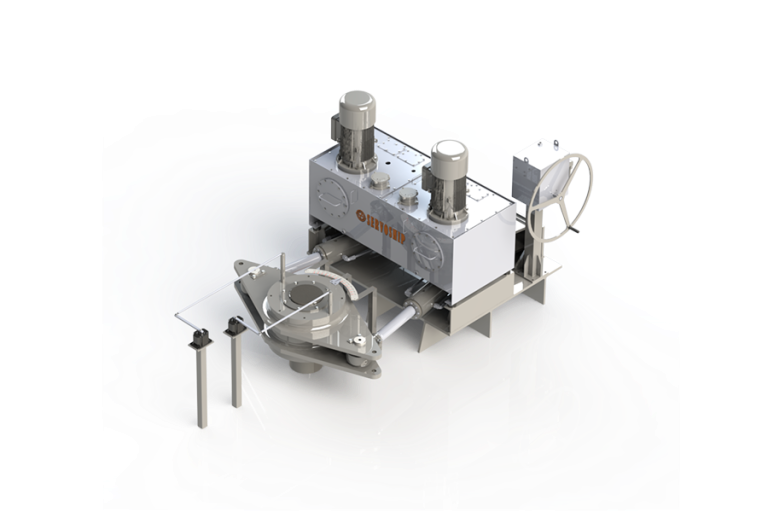
- Actuation systems: servomotors, hydraulic actuators
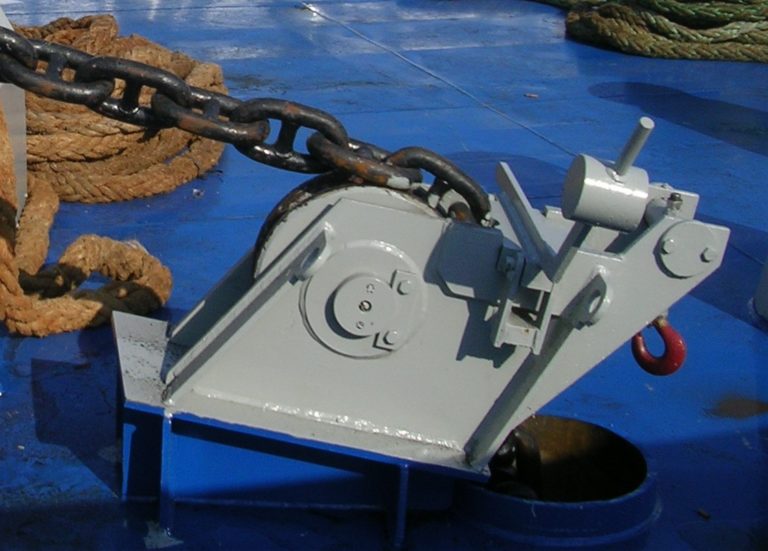
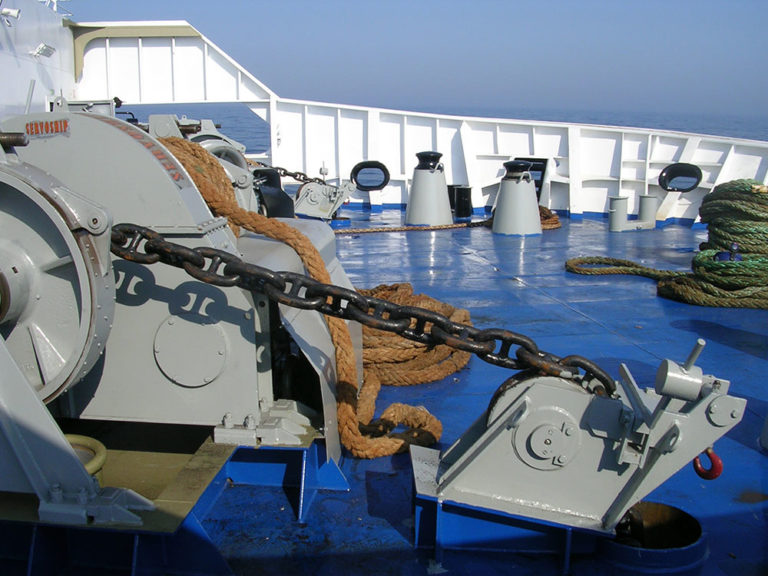
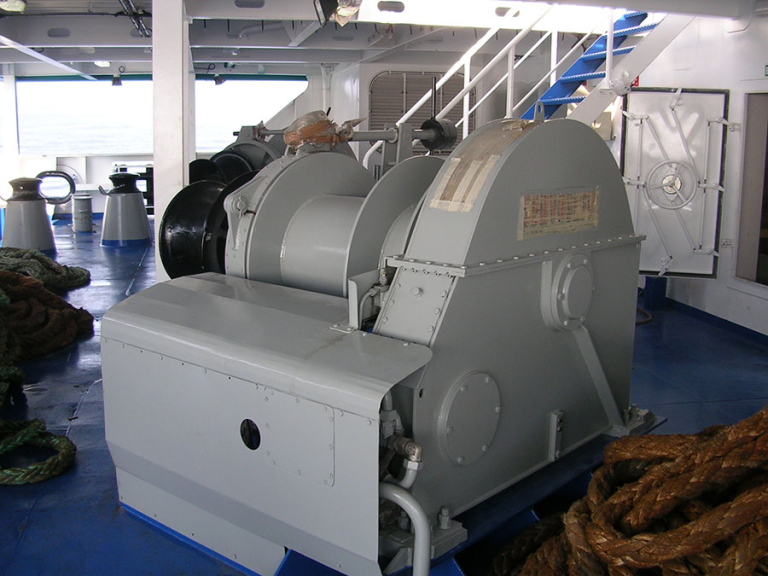
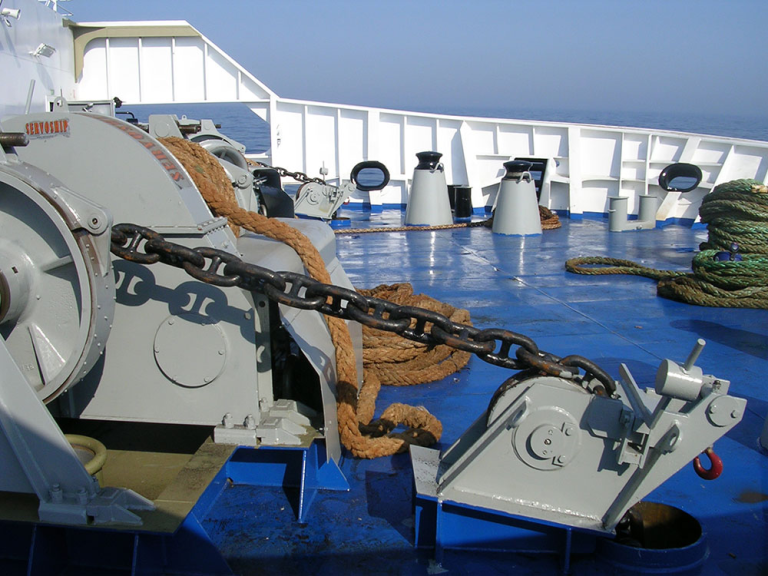
- Mooring and anchoring systems: windlasses, capstans, winches
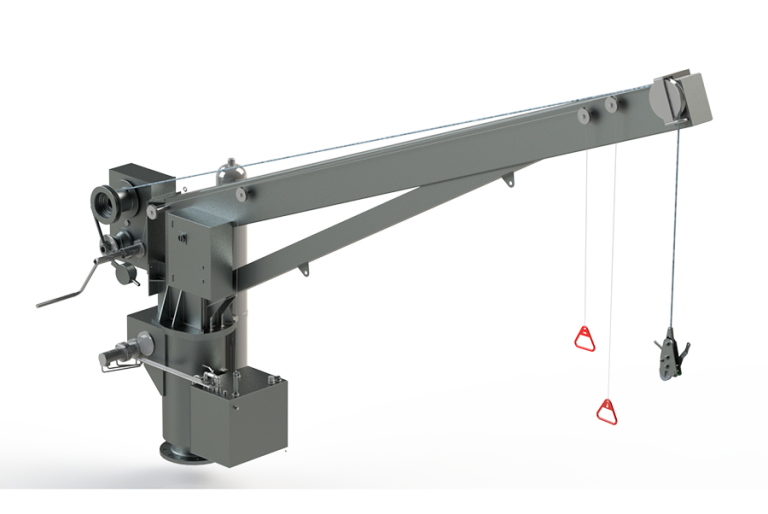
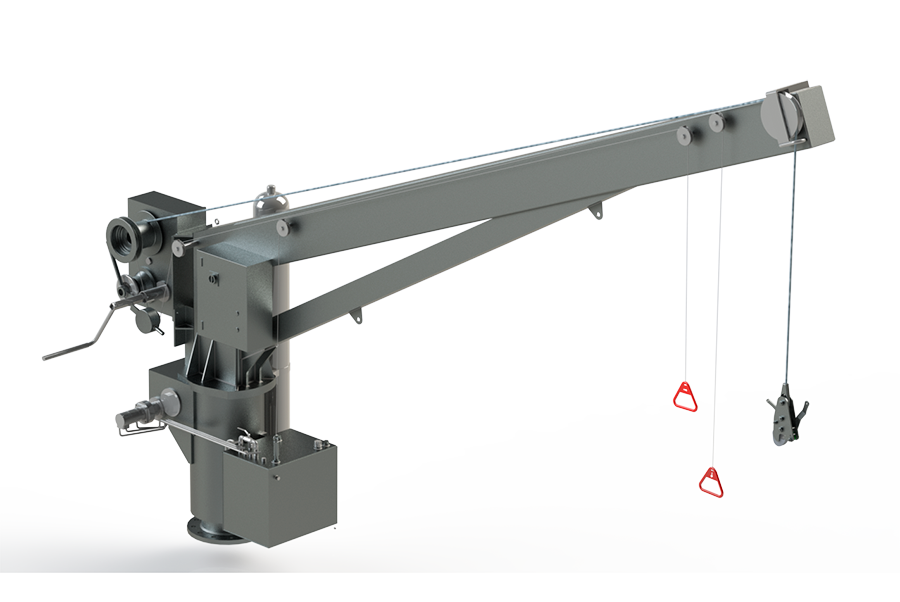
- Lifting equipment: davits and cranes
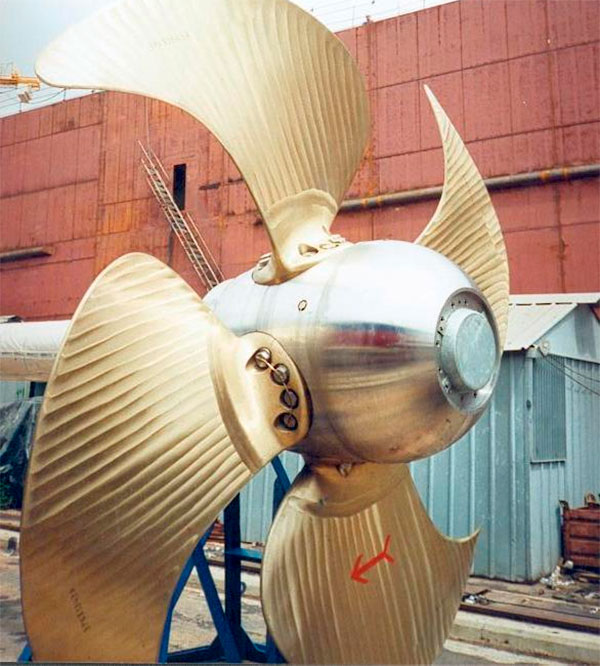
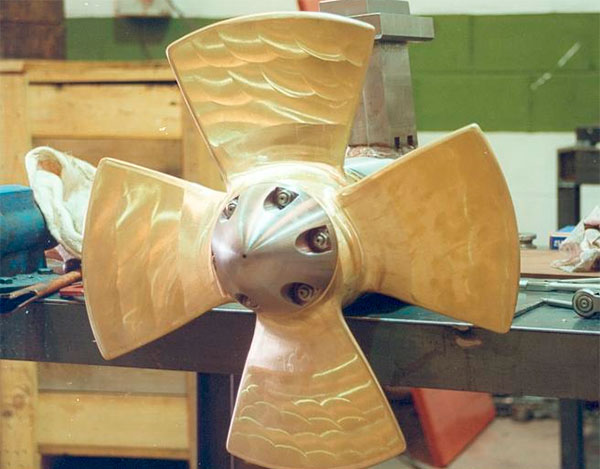
- Propulsion systems: propellers, shafts and associated mechanisms
Each of these systems must be designed considering its interaction with the rest of the vessel and its specific operational role.
Engineering criteria for equipment selection
1. Defining the vessel’s operational profile
The first criterion is understanding how the vessel will operate:
- Type of activity (fishing, offshore, transport, port support)
- Duty cycle (continuous, intermittent, peak loads)
- Environmental conditions (open sea, Arctic zones, shallow waters)
This analysis directly determines:
- Structural sizing
- Material selection
- Anti-corrosion protection systems
2. Load calculations and safety factors
Equipment must be designed considering:
- Static loads (self-weight, nominal load)
- Dynamic loads (impacts, wave action, accelerations)
- Structural fatigue
In systems such as davits or cranes, high safety coefficients are commonly applied due to the risks associated with lifting operation failures.
3. Integration with vessel design
A frequent mistake is selecting equipment without considering real integration constraints:
- Available deck space
- Interference with other systems
- Weight distribution and vessel stability
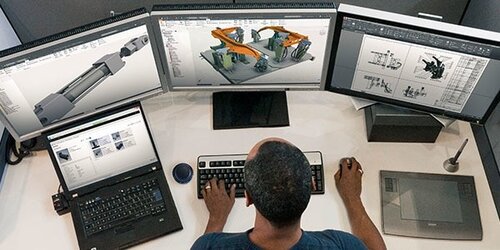
Custom engineering becomes particularly important at this stage, allowing equipment to adapt to project constraints instead of forcing standard solutions into unsuitable layouts.
According to Servoship project documentation, customisation is one of the company’s main differentiating factors in this type of industrial solution.
4. Materials and resistance to the marine environment
Marine environments introduce specific engineering challenges:
- Saltwater corrosion
- Abrasive wear
- Thermal variations
For this reason, common solutions include:
- High-strength steels
- Specialised surface treatments
- Cathodic protection systems
Equipment durability is directly linked to these engineering decisions.
5. Maintenance considerations
The total cost of a piece of equipment depends not only on the initial purchase price, but also on:
- Maintenance frequency
- Accessibility
- Spare parts availability
Proper engineering design should minimise operational downtime and facilitate technical interventions.
This becomes particularly relevant considering that maintenance can represent a significant share of operational costs in complex naval systems.
Types of equipment and specific selection criteria
Mooring and anchoring systems
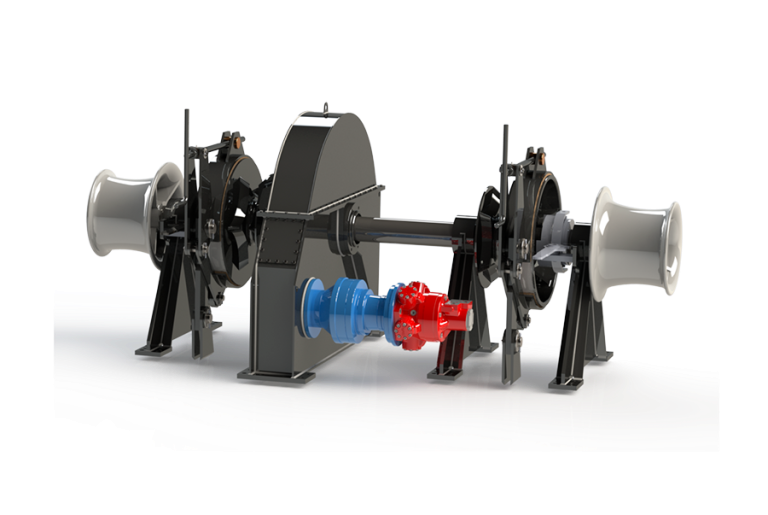
- Pulling capacity
- Operating speed
- Compatibility with ropes and chains
Davits and cranes
- Safe Working Load (SWL)
- Reach and geometry
- Structural stability
Servomotors
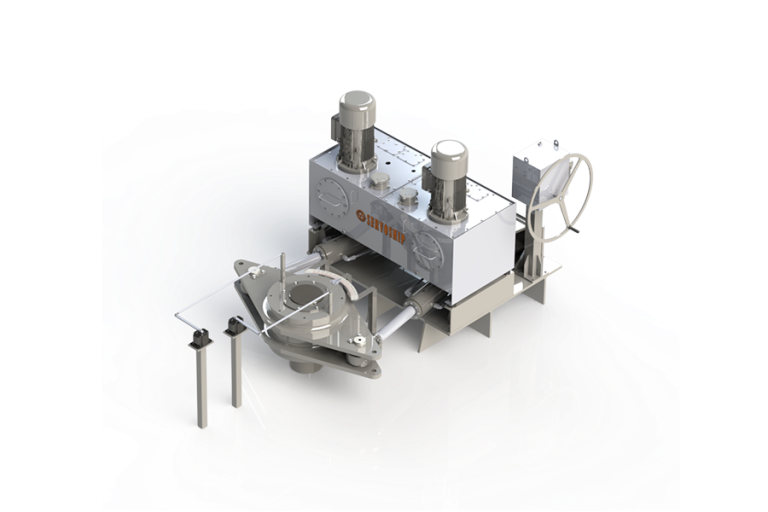
- Control precision
- Reliability under repetitive cycles
- Integration with hydraulic or electrical systems
Propulsion systems
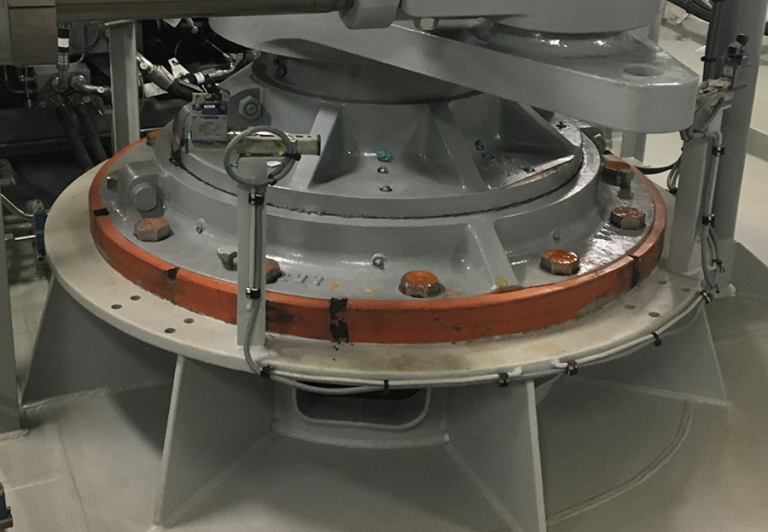
- Energy efficiency
- Hull compatibility
- Vibration reduction
Common mistakes when selecting marine equipment
Unnecessary oversizing
This increases manufacturing, installation and operating costs without delivering real improvements in safety or performance. It also adds structural weight to the vessel, negatively affecting stability and fuel efficiency.
This issue often results from applying excessive safety margins without rigorous load calculations and operational analysis.
Ignoring regulatory requirements from the beginning
This can lead to costly redesigns in advanced project stages or even full equipment replacement. Failing to integrate classification society requirements or regulations such as SOLAS or the Marine Equipment Directive (MED) can compromise final certification.
This problem usually appears when basic engineering phases do not include early regulatory validation.
Selecting equipment based only on price
This approach ignores the Total Cost of Ownership (TCO), including maintenance, energy consumption, operational downtime and service life.
A cheaper initial solution may generate significantly higher long-term costs if reliability is poor or maintenance requirements are frequent. This approach is incompatible with industrial projects where operational availability is critical.
Not considering maintenance
Equipment that is difficult to maintain generates operational inefficiencies, increases downtime and raises operating costs. Poor accessibility, lack of spare parts standardisation or intervention complexity are critical issues.
Proper design must facilitate inspections, preventive maintenance and replacement of key components.
Frequently asked questions
What are the most important factors when choosing marine equipment?
The main factors include the vessel’s operational profile, working loads, environmental conditions and regulatory compliance. Integration with the vessel’s overall design and Total Cost of Ownership are also essential considerations.
Reliability and durability are usually decisive in demanding industrial environments. A complete engineering evaluation helps prevent operational issues.
Why is regulatory compliance important from the beginning?
Regulatory compliance affects the design, manufacturing and installation of marine equipment. Integrating these requirements from the start avoids redesigns, delays and additional costs during later project phases.
It also ensures that the vessel can be certified by classification societies, which is essential for legal and commercial operation.
How does maintenance influence equipment selection?
Maintenance directly impacts operational availability and long-term costs. Equipment with complex or limited maintenance access can generate extended downtime and higher operating expenses.
For this reason, it is important to select solutions that simplify inspections and component replacement. Engineering design should consider the full lifecycle of the equipment.
Is it always advisable to choose standard equipment?
Not necessarily. Standard equipment may be suitable for simple applications, but industrial vessels often involve specific constraints related to space, loads or system integration.
In these situations, custom-designed solutions improve performance and reduce integration conflicts with other onboard systems.
What role do classification societies play?
Classification societies verify that equipment and vessels comply with technical and safety standards. Their approval is necessary for certification and vessel operation.
They also establish criteria for design, inspection and maintenance. Working according to their requirements ensures quality, reliability and regulatory compliance.
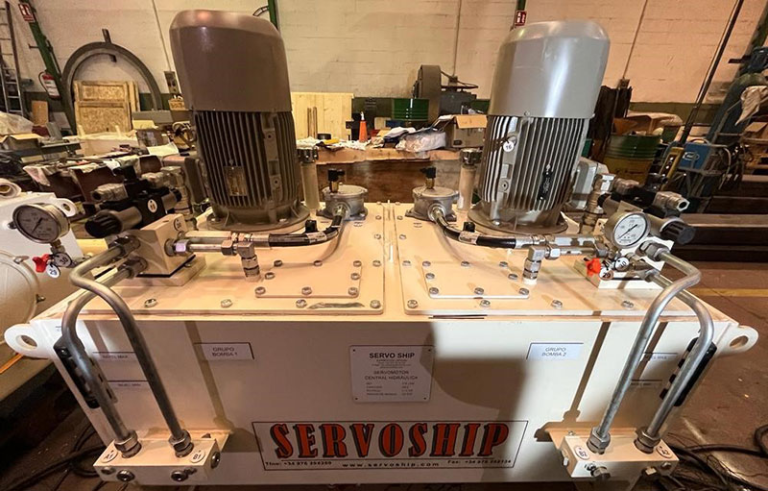
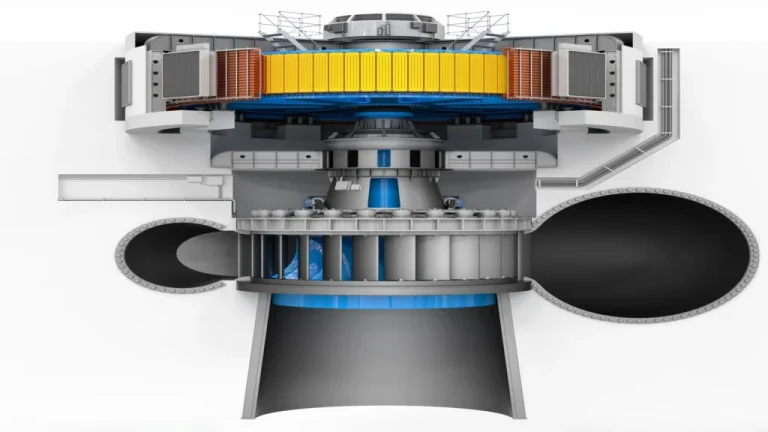
At Servoship, we have more than 50 years of experience in the design and development of marine equipment and hydraulic turbines, with more than 480 projects completed in the naval and hydroelectric sectors.
Our engineering approach combines customised design, regulatory compliance and technical support throughout the entire project lifecycle, allowing us to deliver reliable solutions for demanding industrial environments.
Last posts
 21 de September de 2026
 9 de September de 2026
 2 de September de 2026
- 26 de August de 2026
- 17 de August de 2026
 5 de August de 2026
 28 de July de 2026
 11 de May de 2026
 11 de May de 2026
- 11 de May de 2026