How marine equipment certification influences the selection of naval equipment

When a shipyard, engineering company or shipowner compares different solutions for a vessel, technical performance usually comes first. Capacity, dimensions, materials, actuation and operating conditions are some of the parameters that shape the selection. However, for certain types of naval equipment, another factor can determine from the outset which solutions can be installed: certification and approval requirements.
In this field, stating that a product is “certified” provides limited information unless the scope of that certification is known. It is necessary to establish what has been assessed, against which requirements, which body has been involved in the process and which configuration the approval covers. The answer may vary depending on the vessel type, flag State, equipment concerned and applicable classification rules.
This information becomes particularly important when comparing manufacturers. Two products may offer similar mechanical performance while differing significantly in terms of type approval, testing or available documentation. Checking these aspects before finalising the purchase helps prevent a documentation issue from affecting the design or installation at a later stage.
What does it mean for naval equipment to be certified?
There is no single certification procedure applicable to all naval equipment. Each product is subject to the standards and regulations applicable to its function and to the characteristics of the vessel.
The Marine Equipment Directive 2014/90/EU provides a clear example. Its scope covers certain equipment intended to be placed on board EU ships and establishes specific procedures for demonstrating conformity. Once the applicable requirements have been met, the product bears the wheel mark and the manufacturer must draw up an EU Declaration of Conformity. (eur-lex.europa.eu)
The same legislation provides for different conformity assessment procedures, including EU-type examination and conformity based on unit verification. The applicable procedure depends on the equipment and the conditions established for demonstrating conformity. (eur-lex.europa.eu)
Therefore, the existence of a certificate should not be the end of the assessment. What matters to the party selecting the product is understanding exactly what the certificate demonstrates and whether that approval meets the requirements applicable to the vessel.
What should be checked in a certification?
The first check should establish whether the document corresponds to the product that is actually going to be installed. The model, configuration or characteristics defining the assessed product should be clearly identified.
It is also necessary to establish the framework used for the assessment. A reference to a standard, regulation or classification rule makes it possible to determine which requirements have been considered and whether they match those specified for the project.
The body involved in the assessment is equally relevant. Depending on the case, this may be a flag Administration, a notified body or a classification society. These organisations have different functions, and their documents do not necessarily have the same scope.
The documentation supporting the approval must also be considered. Drawings, calculations, test reports, certificates and declarations of conformity may form part of the technical file and may be required to demonstrate that the installed solution corresponds to the one that was assessed.
For equipment covered by Directive 2014/90/EU, for example, the manufacturer must prepare the required technical documentation and retain it together with the EU Declaration of Conformity for at least ten years from the date on which the wheel mark is affixed, and in no event for less than the expected lifetime of the equipment. (eur-lex.europa.eu)
What role do classification societies play?
Classification societies introduce another set of requirements that must be considered when specifying certain types of marine equipment.
IACS maintains Unified Requirements covering different areas of ship construction and classification, including mooring and anchoring, propellers, machinery installations, materials and welding. These requirements provide a common basis for IACS member societies, which may also establish additional conditions within their own rules. (iacs.org.uk)
For a shipyard, this means that a generic reference to “classification society certification” may not be sufficient. The relevant society, applicable rule and procedure for the particular equipment need to be identified.
Lloyd’s Register, for example, operates type approval schemes for certain marine equipment. Under one of its mutual recognition schemes, the society explains that certain approvals may be recognised by other participating classification societies, while acceptance on ships flying non-EU flags remains subject to the decision of the relevant flag Administrations. (lr.org)
When reviewing a type approval, it is therefore important to establish where and under what conditions it can be used.
Type approval and the equipment as installed
Type approval deserves particular attention because its scope can easily be interpreted too broadly.
The fact that a manufacturer holds an approval for a particular product does not mean that every variant or subsequent modification is automatically covered. The assessed configuration must correspond to the equipment ultimately supplied and, where significant changes are made, conformity may need to be reassessed.
Directive 2014/90/EU requires manufacturers to take account of changes to the design or characteristics of the equipment and changes to the applicable requirements. Where necessary, appropriate measures must be taken to maintain conformity. (eur-lex.europa.eu)
This is particularly relevant when equipment is adapted to the characteristics of a specific vessel. Changes to dimensions, configuration or performance may affect the calculations, tests and documentation supporting the approval.
How to compare suppliers
A technical comparison is more useful when all manufacturers are working to the same requirements. Rather than simply asking whether a product is certified, the request for quotation can include the approval requirements that the proposed solution must meet.
The supplier can then be asked to provide the approval reference, the issuing body, the scope of the assessment, the configuration covered and the tests performed. It is also useful to specify what documentation must be supplied at the end of manufacturing and which documents will form part of the vessel’s technical file.
This level of detail can reveal differences between suppliers that are not apparent when comparing only price, dimensions or nominal performance. It also reduces the risk of selecting a solution that later requires additional procedures or modifications before it can be incorporated into the vessel.
When equipment is designed to order
The assessment becomes even more important when the equipment is not a standard product.
Equipment developed for specific operating conditions may involve manufacturing drawings, calculations, materials, test procedures and specific inspections. For products covered by the European Marine Equipment framework, the technical documentation required under the applicable conformity assessment procedures may include this type of information. (eur-lex.europa.eu)
In this situation, the relationship between the manufacturer, engineering company, shipyard and classification society needs to be clear from the outset. The characteristics of the equipment ultimately manufactured should remain consistent with those assessed, while the supporting documentation should be traceable throughout manufacturing and delivery.
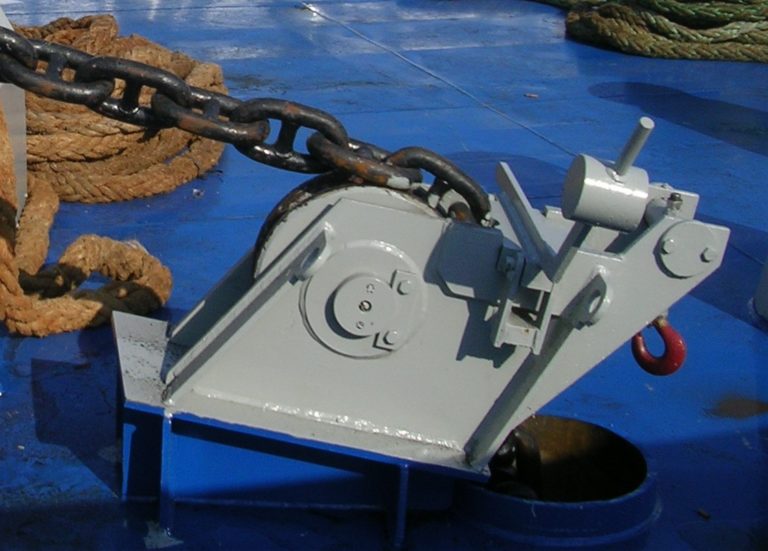
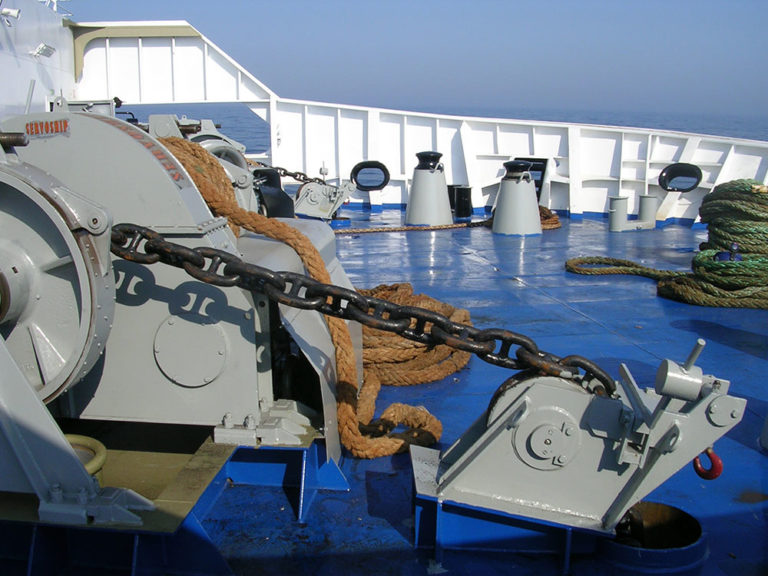
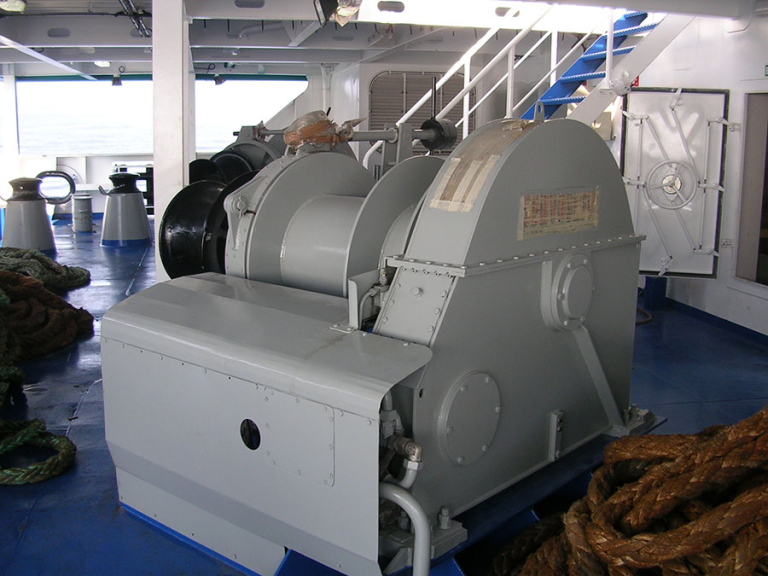
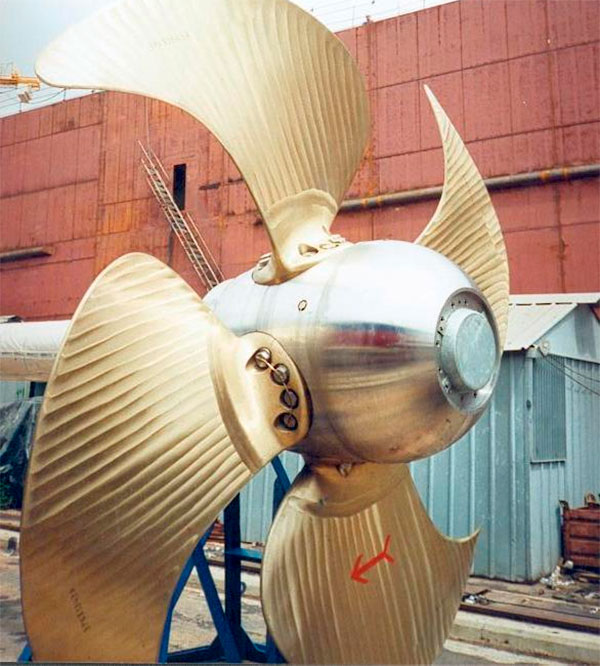
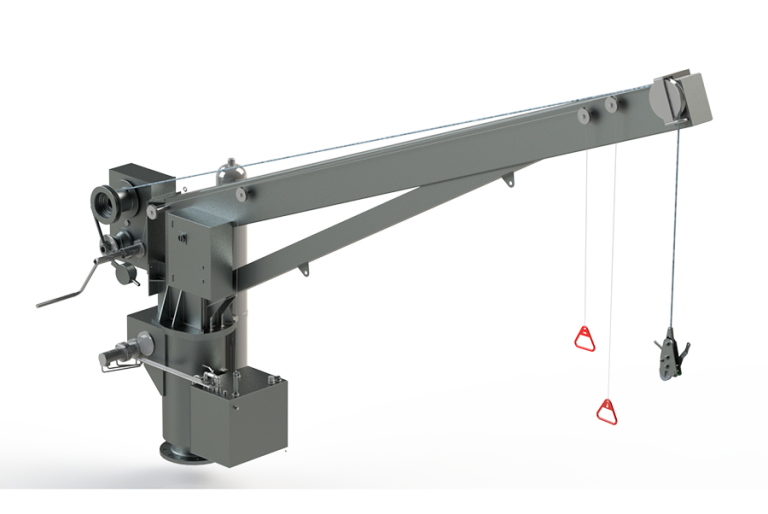
This is particularly relevant to equipment such as davits, mooring and anchoring systems, steering gear or propellers, where operating conditions can determine much of the final configuration.
Certification of Servoship’s naval equipment
Servoship develops custom naval equipment in several product families, including steering gear, mooring and anchoring systems, davits and cranes, and propellers.
The information provided by the company also identifies davits certification and approval to work with major classification societies among the aspects associated with its naval equipment. The company briefing specifically references Lloyd’s Register and Bureau Veritas.
For a project subject to classification requirements, identifying the relevant society and the documentation required from the outset makes it possible to incorporate those conditions into the equipment specification rather than treating approval as a final-stage check.
What should a shipyard check before selecting equipment?
Certification can provide useful information when comparing manufacturers, provided its scope is assessed rather than simply its existence. Before accepting a solution, the shipyard should establish which standard or rule applies, which body is responsible for recognising conformity, which configuration is covered by the approval and what documentation will be supplied. It should also verify that the scope of the certificate corresponds to the equipment that will actually be delivered. Ultimately, the relevant question is not simply whether equipment is certified. What matters is what has been certified, against which requirements, for which configuration and whether that approval meets the specific conditions of the vessel.
When these aspects are reviewed during the selection process, certification becomes part of the technical specification used to compare different solutions.
Are you defining naval equipment for a project subject to classification or certification requirements? Servoship designs and manufactures custom naval equipment, taking the project’s technical and classification requirements into account from the design stage. Contact Servoship about your project.
Last posts
 21 de September de 2026
 9 de September de 2026
 2 de September de 2026
- 26 de August de 2026
- 17 de August de 2026
 5 de August de 2026
 28 de July de 2026
 11 de May de 2026
 11 de May de 2026
- 11 de May de 2026