Technical criteria for selecting mooring and anchoring systems
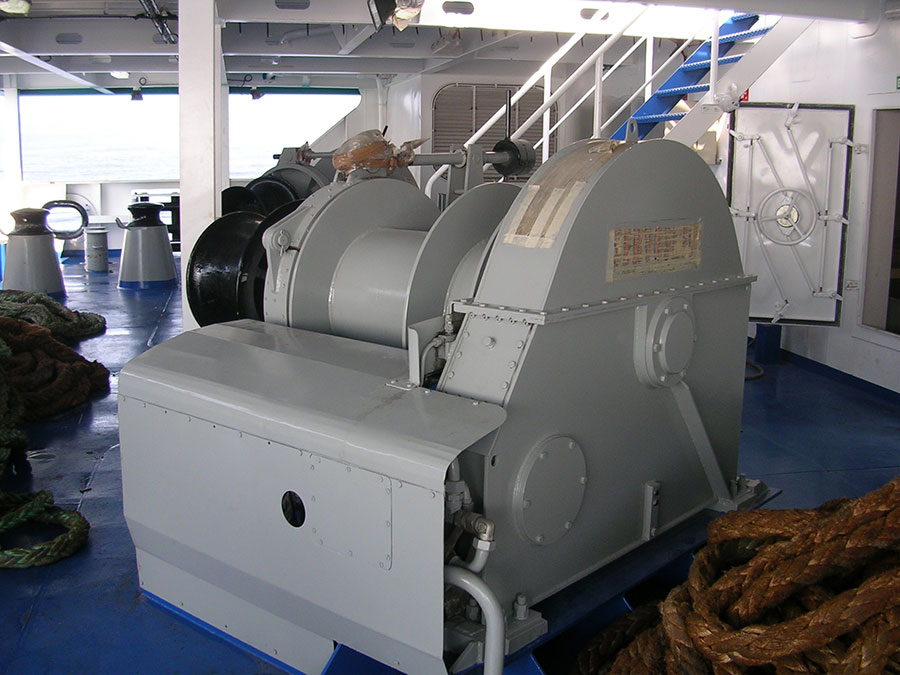
The selection of a mooring and anchoring system requires the operating, sizing and integration requirements to be properly defined before the equipment configuration is finalised. Pulling force, speed, chain or rope characteristics, deck arrangement, available space and control requirements are interrelated parameters that can influence the design.
In projects with specific requirements, nominal capacity is only one part of the specification. The final configuration may be determined by installation conditions, associated equipment and the functions required during operation.
Operating conditions
The intended service—anchoring, mooring, towing or an auxiliary application—provides the starting point. From there, the conditions that will determine the equipment configuration can be defined.
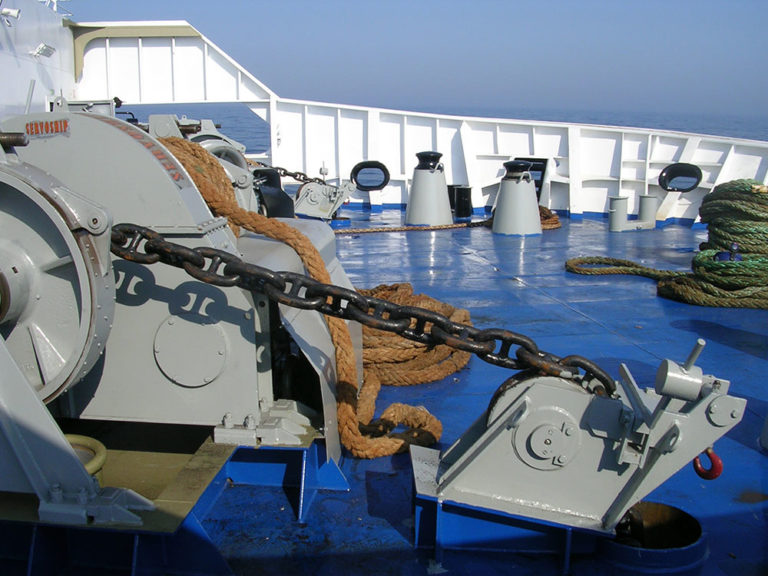
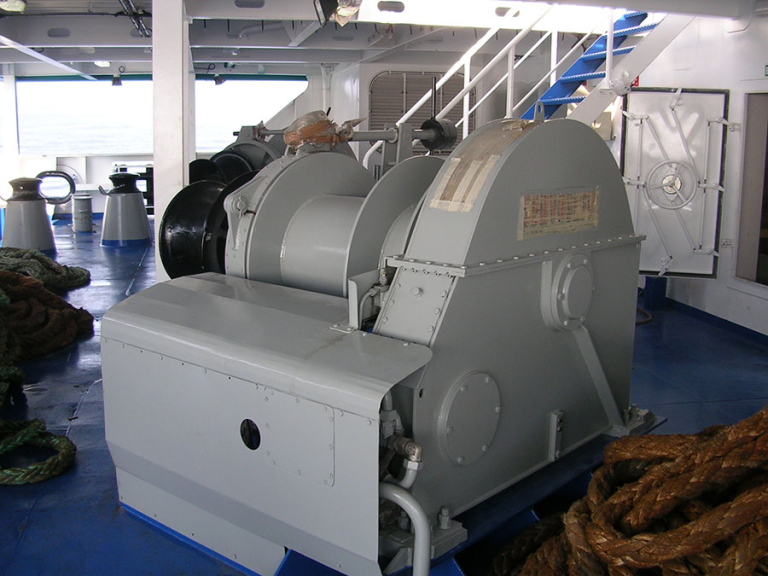
Different arrangements are available within the same application. Anchor windlasses can be manufactured with a vertical or horizontal axis, as single or double chain line units, and combined with drums or capstans when they are also required for mooring operations.
Pulling force and speed
Pulling force and speed directly influence equipment sizing. In mooring winches, they determine the design and, in capstans, the capstan diameter and the sizing of the motor and gear transmission. Towing applications involve additional requirements. The braking torque of the drum’s band brake must be guaranteed above the tug’s Bollard Pull.
Servoship designs mooring winches according to the required pulling force and speed, incorporating these parameters into the equipment definition.
Associated elements
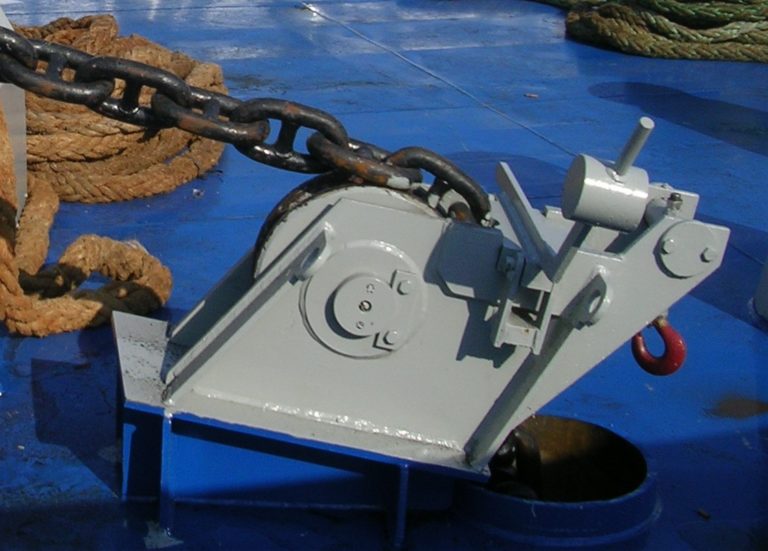
Chain, cable or rope characteristics must be incorporated into the design data. In mooring winches, the required length and diameter determine drum sizing. In anchoring applications, the chain path and associated equipment must also be considered. Chain stoppers, used to guide the chain from the wildcat to the hawse pipe and retain the anchor in its stowed position, are designed to withstand 80% of the chain breaking load.
Integration
Integration on board may require specific modifications even when the functional requirements have already been defined. In anchor windlasses, the distance between hawse pipes, fairleads and Panama guides, among other deck arrangement constraints, may require a specific redesign to adapt the equipment installation.
Restrictions below deck represent another design constraint. Where tanks or insufficient height limit the available space, configurations can be developed with the motor and gears located inside the capstan itself. This arrangement avoids encroachment on the lower space and eliminates the need to increase pedestal height, although it results in a larger capstan diameter.
These types of constraints are part of the custom marine equipment design projects developed by Servoship, particularly where the equipment configuration must be adapted to a specific arrangement.
Configuration and control
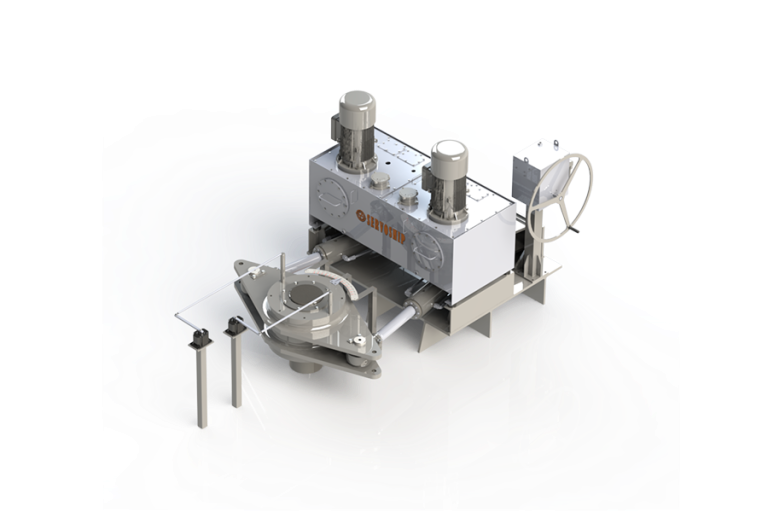
The specification must include the arrangement of drums and capstans, the drive system and the required control functions. Hydraulic, electric and electrohydraulic configurations are available, together with associated elements such as power units, electrical power and control panels, or starting and frequency conversion systems.
Functions such as constant tension, peak torque protection, chain length indication, proportional controls and hydraulic brake or clutch actuation can also be incorporated. In towing applications, emergency release or Quick Release systems, pull indication, length of rope paid out and monitoring systems may also be required.
Classification
The requirements of the applicable classification society must be incorporated from the project definition stage. Equipment can be certified in accordance with the requirements established for each project. Servoship has experience in supplying anchor windlasses certified under Lloyd’s Register, Bureau Veritas, RINA and DNV-GL.
Conclusion
Technical selection requires a complete specification that brings together operating conditions, sizing parameters, associated elements, on-board integration and the required control functions.
Servoship develops deck machinery for anchoring, mooring, towing and other applications, with solutions adapted to the technical and integration requirements defined for each project.
Last posts
 21 de September de 2026
 9 de September de 2026
 2 de September de 2026
- 26 de August de 2026
- 17 de August de 2026
 5 de August de 2026
 28 de July de 2026
 11 de May de 2026
 11 de May de 2026
- 11 de May de 2026